
Service
Laparoscopic & Open Surgery
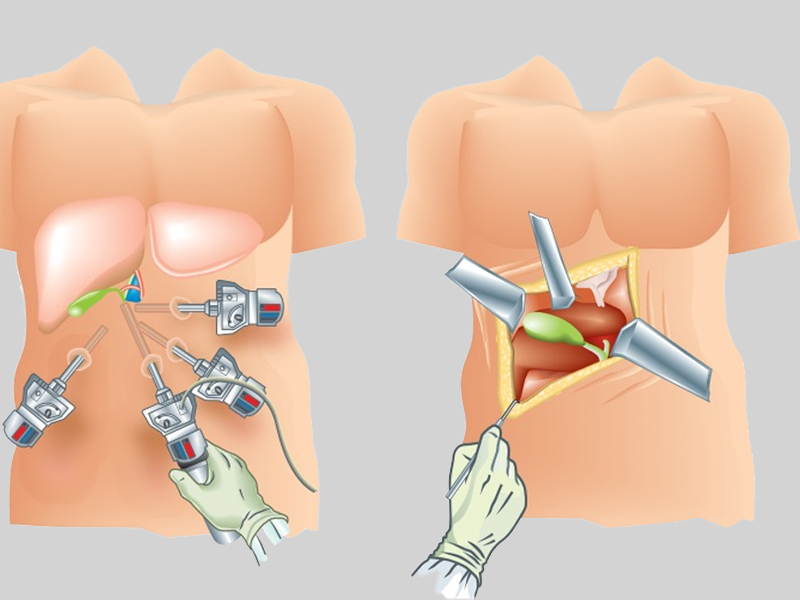
Open and laparoscopic surgeries are two distinct approaches to surgical procedures, each with its own advantages and disadvantages. Open surgery involves a large incision, while laparoscopic surgery utilizes small incisions and specialized instruments for a minimally invasive approach. The choice between them depends on the specific procedure, the patient's condition, and the surgeon's expertise.
Open Surgery
- Incision : A single, large incision is made to directly access the surgical site.
- Recovery : Generally involves a longer recovery period, more pain, and larger scars.
- Suitability : Often preferred for complex cases where direct access and tactile feedback are crucial.
Laparoscopic Surgery
- Incision : Utilizes small "keyhole" incisions, typically less than a centimeter each.
- Surgical Approach : A camera (laparoscope) provides a magnified view on a monitor, and specialized instruments are used for precise movements.
- Recovery : Leads to faster recovery, less pain, and minimal scarring.
- Suitability : Often preferred for less complicated surgeries and when minimally invasive techniques can achieve the same outcomes.
- Benefits : Smaller incisions, less blood loss, reduced risk of infection, shorter hospital stays, and faster return to normal activities.
Factors to Consider When Choosing
- Nature of the medical condition: Some conditions may require open surgery for optimal outcomes.
- Patient's overall health status: Factors like obesity can influence the choice of technique.
- Surgeon's expertise: Laparoscopic surgery requires specialized training.
In conclusion, both open and laparoscopic surgeries have their place in modern medicine. A thorough discussion with a healthcare professional is crucial to determine the best approach for each individual case.